Unsubscribes shows how many people have left each keyword. Its title on the page is Daily Unsubscriptions, and it is worth reading closely, because the day on each column is not the day the person left.
You need to be an admin, or to have been given access to the Reporting module, to open Reports. These pages are in the classic Reports area. The newer Analytics area is a separate set of reports.
Where to find it
- Click Reports in Echo’s main menu.
- In the left menu, open the Autoresponders group and click Unsubscribes.
- Pick a date range and, if you need to, a time zone at the top of the page. Open Sources to choose which of your sources to include.
- Click Run Report on the card. The report runs in the background, so give it a moment on a long date range.
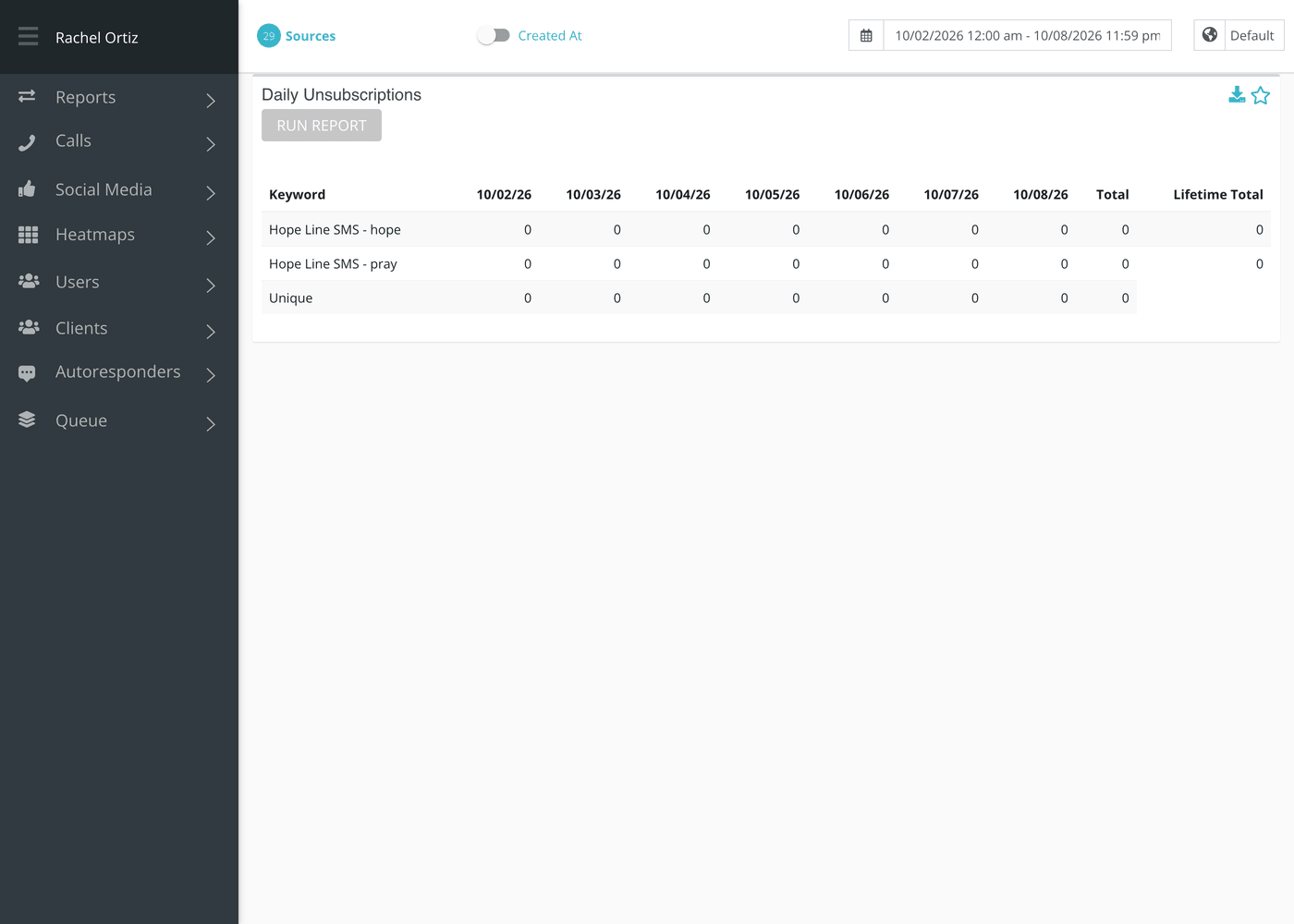
Which day is it?
Each day column counts the people who subscribed on that day and have since unsubscribed. It does not count the people who left on that day. If someone joined last month and replied STOP today, they appear under last month’s day, not today’s.
This means the report answers “of the people we gained on each day, how many did we lose?”. To see the day each person actually left, use the Unsubscribed At column in The Autoresponder Subscriptions report.
Reading the table
| Column or row | What it means |
|---|---|
| Keyword | The source and keyword for each campaign. |
| Day columns | People who joined that keyword on that day and have since unsubscribed. |
| Total | The day columns added up for the keyword. |
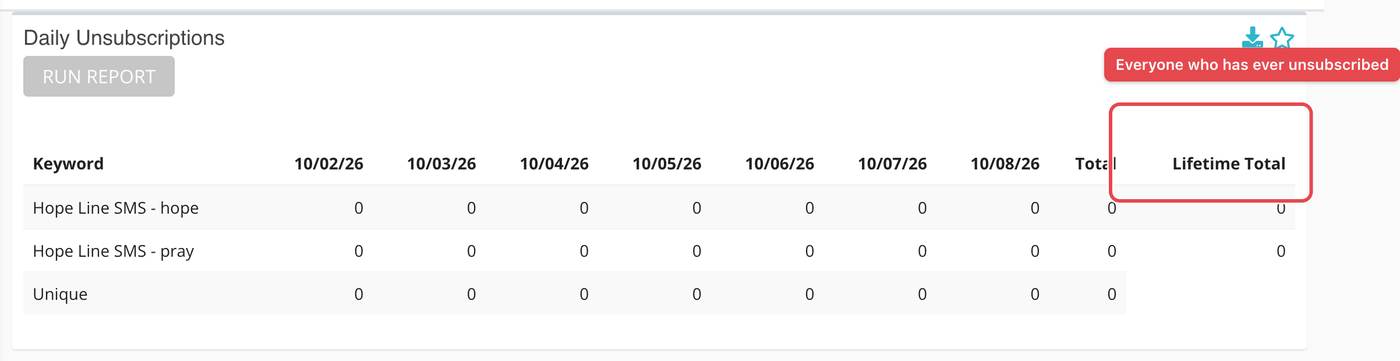
| Lifetime Total | Everyone who has ever unsubscribed from the keyword, whatever the date range. |
| Unique (last row) | Each person counted once per day across all keywords. Its Total is the number of different people in the range who have unsubscribed from anything. |
A campaign is included when it started on or before the end of your date range, has not ended before the end of the range, and was not archived before the end of the range. That is why a campaign you archived last week still shows in a report for the month before.
What the measurements mean
| Term | What it means |
|---|---|
| Unsubscribed | The person replied STOP (or a similar word) or was taken off the campaign, so the subscription has an unsubscribe date. |
| Unique | A person who left two keywords counts once in this row, and once in each keyword’s own row. |
| Lifetime Total | A running all-time number. It does not change with your date range. |
If something looks wrong
- Today’s column is empty though people texted STOP today. That is expected. They are counted under the days they joined.
- Numbers for a past day grow over time. Each time more of that day’s joiners leave, the count rises.