Some messages a ministry receives matter more than others, and they are not always the ones a responder flags at the time. A risk word is a word that, when it appears in a message, marks that message — so the conversation can be found again later, whoever answered it.
Where to find it
In the admin menu, click Reports, then Risk Words along the top.
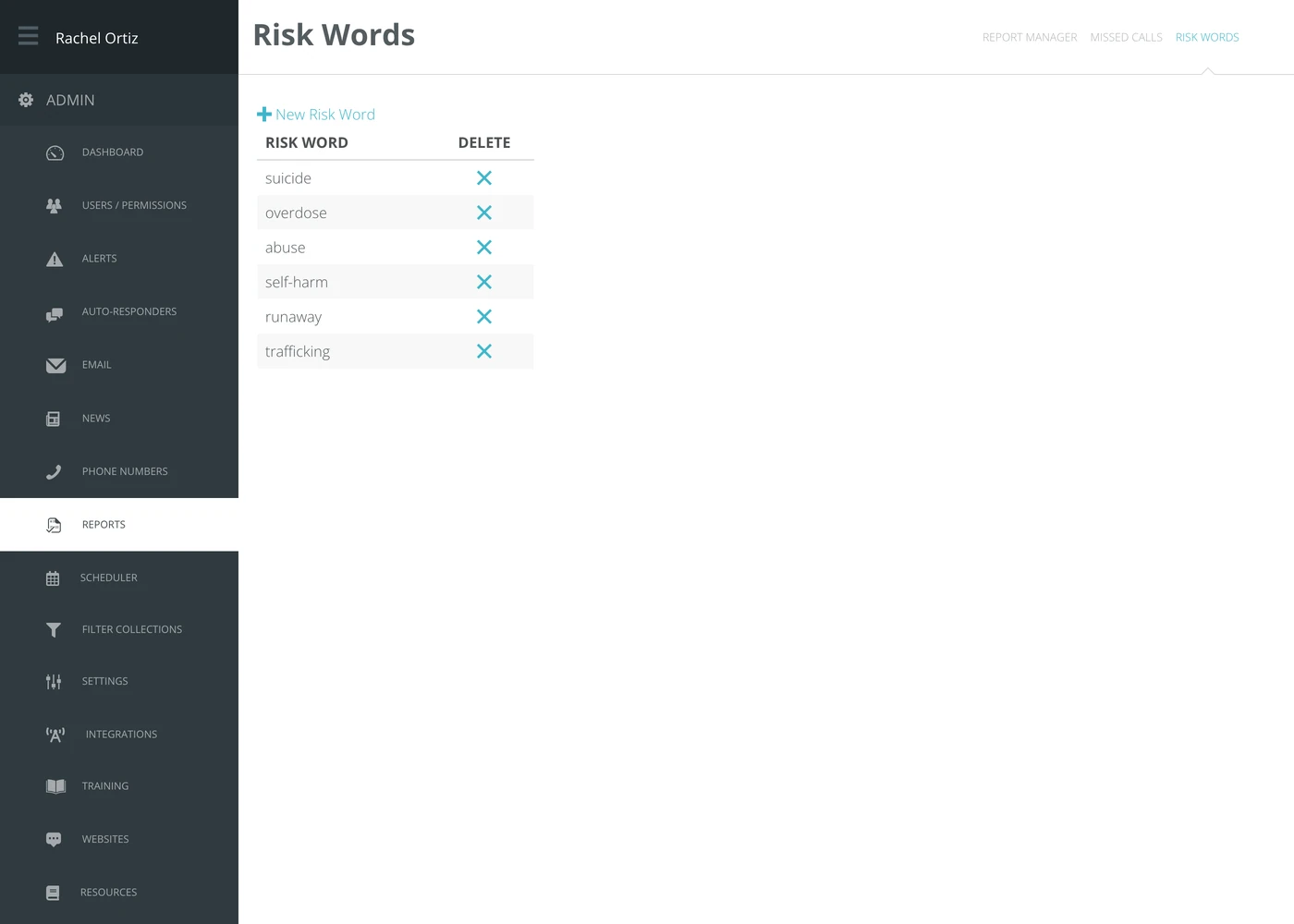
Adding a risk word
- Click New Risk Word.
- Type the word.
- Click Submit.
To remove one, click the x in the Delete column on its row.
How matching actually works
This is the part worth understanding before you write your list, because it decides what you should put in it.
- Echo checks every incoming and outgoing message as it is saved.
- Capitals do not matter. A risk word matches however the message spells it, and however you typed the word: Suicide, suicide and SUICIDE are the same word to Echo. The report highlights the match as it was written.
- Matching is on any part of the message, not whole words. A risk word of
harmalso matches harmless and pharmacy. - The message is marked. The conversation is not stopped, redirected, or hidden from the responder.
Because matching is on any part of a message, short words produce a great many false matches. Prefer whole phrases and longer words — a list that marks everything marks nothing.
Until August 2026 a capitalized risk word matched nothing, and this article told you to type every word in lower case. That is no longer true. A list you built under the old rule still works; you do not need to retype it.
A risk word is not an alert. It marks a message for later; it does not tell anybody now. If you need somebody notified while the conversation is live, set up an alert as well.
What the terms mean
| Term | What it means |
|---|---|
| Risk word | A word or phrase your ministry wants marked when it appears in a message. |
| Marked message | A message Echo has recorded as containing one of your risk words. |
| Alert | A separate feature that emails or texts named people when something happens. Alerts tell you now; risk words let you look back. |
Building a list worth having
Write the list with the people who do your safeguarding follow-up, not on your own, and revisit it. Words change, and the list only helps if it reflects what your seekers actually say.